

Walk into a modern bulk material handling facility and the thing that stands out isn’t the silo. It’s how little human intervention it takes to keep material moving through it. Sensors, predictive maintenance, and automated discharge controls have become standard equipment rather than premium add-ons, and the shift is changing how facility operators think about steel silo specification from the ground up.
The driver isn’t novelty for its own sake. Bulk handling operations across petroleum coke, powders, granules, and mineral processing face the same pressure every industrial sector faces: do more with the labor available, cut unplanned downtime, and hit tighter environmental compliance targets without a proportional headcount increase.
The efficiency numbers behind the shift
Industry data on the trend is specific about where the gains come from. Facilities implementing modern automation are seeing throughput speeds increase by up to 40 percent compared to conventional manual operations, driven largely by continuous 24/7 operation with automated error minimization.
Predictive maintenance delivers a separate benefit. AI-driven monitoring that tracks equipment condition in real time cuts unplanned downtime by up to 30 percent, largely by catching wear patterns early enough that repairs get scheduled during off-peak hours instead of forcing an emergency shutdown mid-production.
What this means for silo design, not just operation
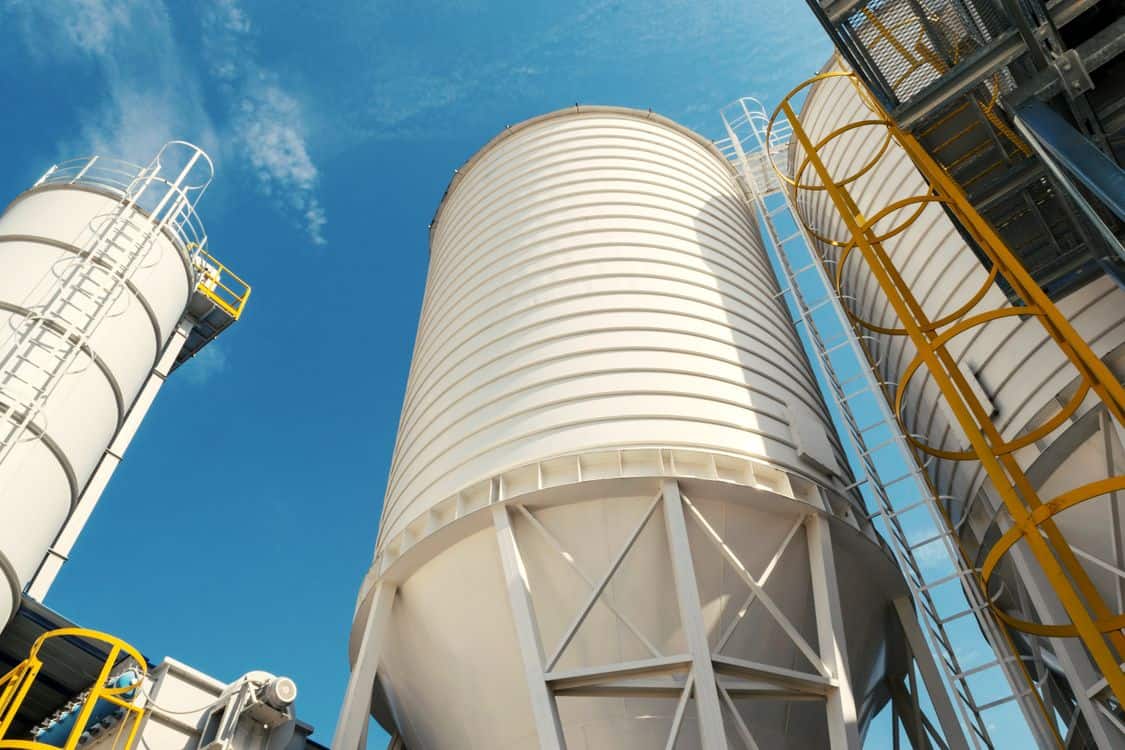
The trend isn’t confined to the equipment surrounding a silo. It’s changing what facility owners specify in the silo itself. Level sensors, aeration monitoring, and integrated dust collection used to be optional upgrades bolted onto a standard structure. Now they’re increasingly designed in from the start, because retrofitting automation onto a structure that wasn’t built to accommodate it costs far more than specifying it upfront.
That shift has knock-on effects for how silos get sized. A facility planning for automated, continuous discharge doesn’t necessarily need the same buffer capacity a manually-operated facility would, since automation reduces the variability that used to require extra storage margin as insurance. Structural configuration follows the same logic. Spiral construction remains efficient for straightforward site assembly, but facilities integrating heavy automation packages increasingly specify welded construction for the added precision sensor integration benefits from.
Sustainability targets are pulling in the same direction
Environmental compliance reinforces the automation trend rather than competing with it. Industry projections tied to 2026 sustainability goals point toward cutting carbon emissions by roughly 30 percent across global supply chains, and bulk material handling is one sector where automated, precisely controlled operations directly support that target: less spillage, less energy waste, tighter dust emission control.
For operations facing specific regulatory thresholds, like fly ash handling under updated emissions standards, automated dust collection isn’t just an efficiency play anymore. It’s close to a compliance requirement, which is accelerating adoption timelines that might otherwise have stretched over a decade.
Beyond throughput and downtime, there’s a labor market reality pushing this along that doesn’t always make the efficiency statistics. Skilled operators for bulk handling facilities have gotten harder to hire in a lot of regions, and automated systems reduce how many people a facility needs to run continuous operations. That matters more when the applicant pool for those roles has shrunk rather than grown. It’s arguably become the more decisive justification for some facility owners. A silo system that runs reliably with a smaller team isn’t just cheaper; in tight labor markets it’s the difference between running at planned capacity and running short-staffed on a given shift.
Facilities handling specialized materials, lithium battery feedstock, alumina, sulfur, urea, face an added layer of complexity, since these materials often have handling requirements, moisture sensitivity, or safety considerations that benefit disproportionately from precise, sensor-driven control. For those operations, automation is less a labor play than a product quality and safety play that happens to also deliver the efficiency gains showing up in the broader data.
Talking to facility owners currently specifying new bulk storage capacity, the priority list has shifted noticeably from where it stood three or four years ago. Raw storage capacity is increasingly table stakes; the assumption is a silo will hold what it’s supposed to hold. The differentiating questions now are about integration: how well the monitoring system talks to the facility’s broader operations software, how much of the discharge sequence runs without manual intervention, how quickly a maintenance issue gets flagged before it becomes an unplanned shutdown.
Retrofit projects come with their own complications that new-build automation doesn’t face. Older silos weren’t wired for sensor integration, so adding level monitoring or automated discharge control often means running new conduit through a structure that was never designed with cable routing in mind. Some operators have found it cheaper to replace a decades-old silo outright rather than retrofit it, once the labor cost of working around the existing structure gets tallied up against a clean-sheet installation. That math didn’t used to favor replacement nearly as often as it does now.
Vendor consolidation is another quiet effect of the automation push. Facility owners used to buy the silo from one supplier and the sensing and control package from another, integrating the two on site. That split has gotten harder to justify as monitoring systems get more sophisticated, and more owners are now buying complete packages from a single supplier who takes responsibility for the whole system working together rather than troubleshooting compatibility issues between two vendors after the fact.








Leave a Comment