

West Austin’s wildland-urban interface rules make roof fire classification an important permit question on affected properties.
The central issue is the code requirement itself. On affected West Austin properties, roof material and assembly choices have to satisfy the applicable fire-resistance rules.
How Austin’s WUI Rules Affect Roof Material Choices
Austin adopted the 2015 International Wildland-Urban Interface Code with permit compliance reviews starting in April 2021. Roughly 60% of Austin’s neighborhoods fall inside the boundary the ordinance drew, and most of that footprint sits west of Mopac and east of 183, which happens to be where a lot of the region’s higher-end rebuild activity concentrates.
A code can affect material selection whenever a project falls within its scope, even if the rule itself has been on the books for several years.
The relevant question is whether the property and project are subject to the current WUI requirements, not how many years it supposedly takes a code to ‘catch up.’
Permit review can require documentation that the proposed roof assembly meets applicable fire-rating requirements.
Insurance carriers may ask their own wildfire-risk questions, but those underwriting practices should not be generalized without carrier-specific evidence.
Why West Austin Has Many WUI-Exposed Properties
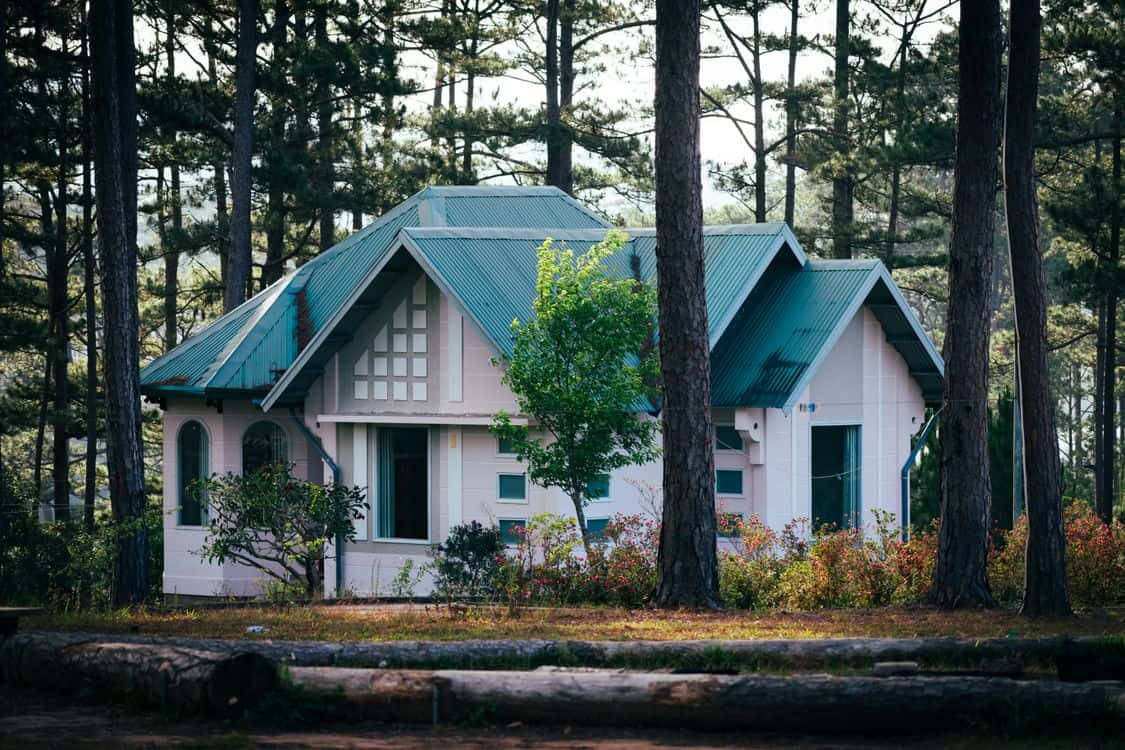
Not every Austin address sits in a WUI zone, and that unevenness is the point. The ordinance ties roughly 55% of the affected area to homes within a mile and a half of a wildland parcel of 40 acres or more.
West Austin includes steep terrain, greenbelts, and substantial vegetation near homes, which helps explain why wildfire-interface rules matter there.
West Lake Hills, a separate municipality bordering the city, isn’t governed by Austin’s ordinance at all, but its own fire department runs a comparable wildfire-preparedness program, and homeowners there face similar material pressure from insurers and lenders even without an identical code on the books. The line on a map matters less to a roofer than the tree line does.
Jurisdiction can change over short distances, so the project address should be checked against the rules of the actual city or county rather than assuming all ‘West Austin’ properties follow Austin’s ordinance.
That patchwork makes code verification important before a like-for-like roof replacement is assumed.
What Class A Means for Material Selection
Class A is the highest fire-resistance rating a roof covering can get under standard testing, and it rules out more than people expect going in. Untreated wood shake is largely off the table in the affected zones now.
Composition shingle, most metal panel systems, concrete tile, and treated or fire-retardant wood products generally clear the bar. Cedar shake can still qualify in some cases, but only when it meets a specific fire-treatment standard, and that treatment adds cost a lot of homeowners don’t budget for until a contractor brings it up mid-quote. Homeowners researching tile roofing in Austin for a West Austin property should confirm that the specific roof assembly meets the applicable Class A and local code requirements.
On a project subject to a Class A requirement, a material that does not meet the applicable assembly rating may need to be changed or installed as part of a compliant rated system.
Metal roofing can meet Class A requirements in appropriate assemblies, but hail performance, cost, appearance, and installation details should be evaluated separately from fire rating.
Many common composition-shingle systems can also achieve Class A ratings, so compliance does not automatically mean a premium metal roof or a major material upgrade.





Leave a Comment